Bookkeeping for Cafe and Restaurant Owners in Malaysia
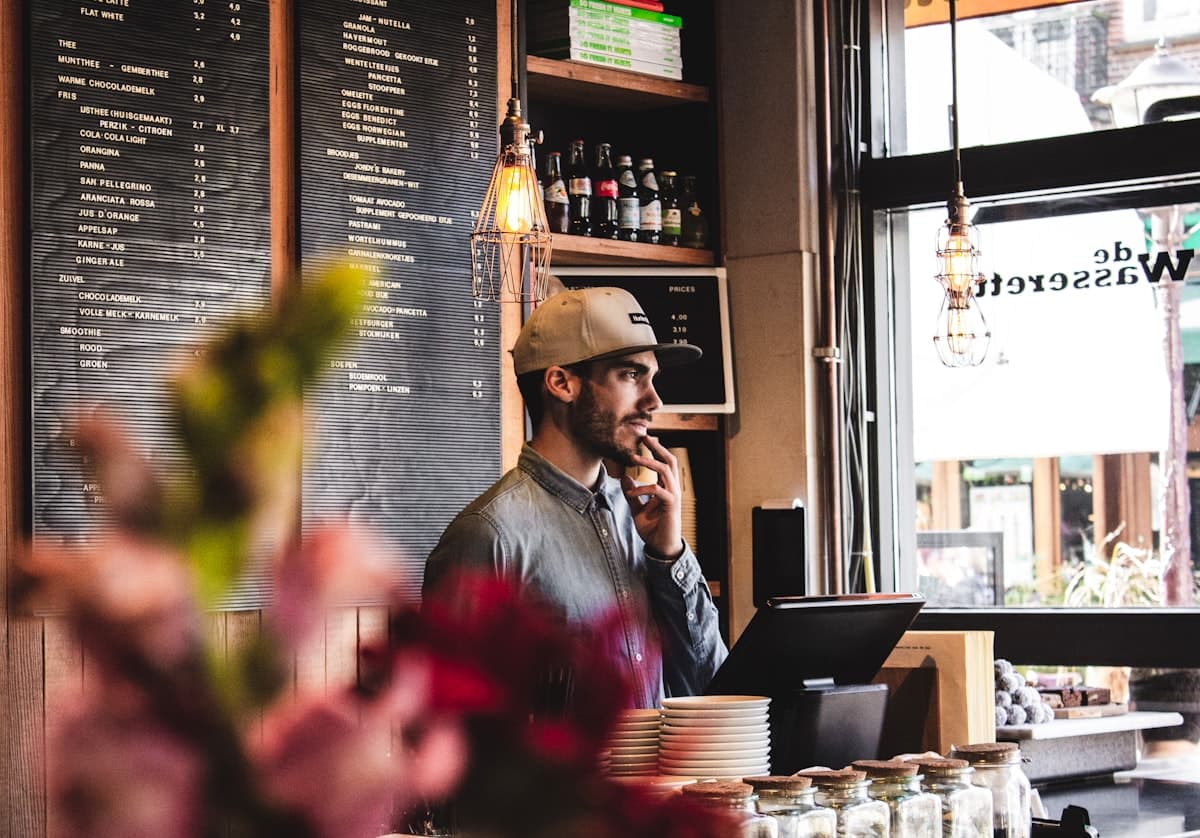
Running a cafe or restaurant in Malaysia is one of the most hands on businesses you can have. You are managing suppliers, staff rosters, daily prep, walk in customers, and delivery orders all at the same time. Bookkeeping is probably the last thing on your mind when the lunch rush hits.
But here is the thing: F&B bookkeeping is different from other types of businesses, and the mistakes I see cafe owners make are almost always the same ones. I work with several cafe and restaurant clients in KL and Shah Alam, and this guide covers the things I wish every F&B owner knew from day one.
Why F&B bookkeeping is different
A regular service business might process 20 or 30 invoices a month. A cafe can process that many transactions in a single day. The sheer volume is the first challenge.
On top of that, you have multiple revenue streams coming in at the same time. There is cash from the register, card payments, e-wallet transactions through Touch n Go or GrabPay, and payouts from delivery platforms like GrabFood, Foodpanda, and ShopeeFood. Each one settles at different times and takes different fees. If you do not reconcile these properly, your books will never match your bank account.
Then there is the cost side. Food costs fluctuate with market prices. You are buying fresh ingredients multiple times a week. There is wastage and spoilage that needs to be accounted for. Staff costs include wages, EPF, SOCSO, and EIS contributions. All of this makes F&B bookkeeping more complex than what most people expect.
Common mistakes I see
After working with multiple cafe and restaurant owners, these are the mistakes that come up again and again.
1. Not separating sales by channel
Many cafe owners lump all their sales together. Dine in, takeaway, GrabFood, and ShopeeFood all go into one number. The problem is that delivery platform orders have lower margins. GrabFood and Foodpanda typically charge 15% to 30% commission on each order. If you do not separate these, you will think you are making more profit than you actually are.
2. Not reconciling delivery platform payouts
When GrabFood pays you, the amount deposited into your bank account is not the same as the total sales value. The platform deducts its commission, any discount co-funding, and processing fees before sending you the balance. If you record the bank deposit as your revenue, you are understating your actual sales and not properly accounting for the commission expense.
3. Ignoring cash handling
Cash sales are still significant for many cafes and restaurants. But cash is easy to lose track of. Voids, refunds, discounts, and staff overrides can all create discrepancies between what the POS says and what is actually in the register. Without daily cash reconciliation, these small gaps add up over time.
4. Not tracking food cost properly
Your gross profit margin is one of the most important numbers in F&B. To calculate it, you need to know your actual food cost, not just what you paid suppliers. You also need to factor in wastage, spillage, and any items given as staff meals or complimentary orders. Most cafe owners I work with only look at what they bought and what they sold, without accounting for what was lost in between.
5. Mixing personal and business expenses
This is not unique to F&B, but it happens a lot. Using the business account for personal purchases, or paying business suppliers from a personal account, makes bookkeeping messy and creates problems during tax filing and audits.
How to handle delivery platform reconciliation
This is the question I get asked most by my F&B clients. Here is how to do it properly.
Delivery platforms like GrabFood, Foodpanda, and ShopeeFood provide settlement reports that show the breakdown of each payout. For each payout cycle, you need to compare three things:
- Your POS records for orders received through that platform during the payout period.
- The platform settlement report showing gross sales, commissions deducted, discount co-funding, and the net payout amount.
- Your bank statement showing the actual amount deposited.
The gross sales should be recorded as your revenue. The commission (typically 15% to 30%) should be recorded as a business expense. The net amount should match what appeared in your bank. If there are discrepancies, check for refunds, order cancellations, or promotional adjustments.
E-invoicing for restaurants
One thing that confuses many F&B owners is how e-invoicing works with delivery platforms. The good news: you do not need to issue e-invoices for orders processed through GrabFood, Foodpanda, or ShopeeFood.
Under LHDN's e-invoice framework, marketplace platform operators are responsible for issuing e-invoices for the revenue they facilitate on behalf of merchants. Your obligation as the restaurant covers direct transactions only. That means dine in, counter takeaway, catering, and any direct online orders not going through a third party platform.
For high volume B2C cash sales (like a busy lunch service), you can batch all eligible direct transactions into a single consolidated e-invoice submitted within 7 calendar days after month end. Individual transactions of RM10,000 or more still need their own e-invoice. For most cafes and restaurants, very few individual transactions will hit that threshold.
For more details on e-invoicing, I wrote a separate guide: E-Invoicing for Small Businesses in Malaysia.
SST for F&B businesses
Service tax applies to F&B businesses in Malaysia. If your taxable F&B service revenue exceeds RM1.5 million in any 12 month period, you are required to register with the Royal Malaysian Customs Department and charge 6% service tax on eligible services.
Once registered, you file SST-02 returns every two months. The deadline is the last day of the month following each two month taxable period. For example, the return for January and February is due by 31 March.
Important: all sales from delivery platforms must be included in your SST declarations if you are registered. You cannot skip tax reporting just because the payment came through an app.
One more thing that cafe owners sometimes miss: the commission you pay to GrabFood or Foodpanda is a deductible business expense. Make sure you request tax invoices from these platforms for accurate documentation.
What to track every day, every month
Here is a simple breakdown of what your bookkeeping routine should look like if you run a cafe or restaurant.
Daily
- Record all sales by channel (dine in, takeaway, delivery)
- Reconcile the cash register with POS reports
- Record supplier payments and petty cash expenses
- Note any voids, refunds, or complimentary orders
Monthly
- Reconcile all delivery platform payouts with POS records and bank statements
- Reconcile card and e-wallet settlements with your bank
- Review food cost percentage and gross profit margin
- Process payroll including EPF, SOCSO, and EIS
- File SST-02 return if registered (every two months)
- Submit consolidated e-invoice for direct B2C transactions
What I handle for my F&B clients
I currently work with several cafe and restaurant businesses in KL and around Malaysia. Here is what a typical month looks like for my F&B clients:
- Recording all income by channel (dine in, delivery, catering)
- Reconciling GrabFood, Foodpanda, and ShopeeFood payouts
- Matching bank deposits with POS and platform records
- Recording all expenses including suppliers, rent, utilities, and staff costs
- Preparing Profit and Loss reports so you can see exactly where your money goes
- Keeping records organised and ready for tax submission
The goal is simple: you focus on running the cafe, and I make sure the numbers are right. When tax season comes, everything is already prepared.
Common questions
Do I need to issue e-invoices for GrabFood and ShopeeFood orders?
No. Under LHDN's e-invoice framework, marketplace platform operators like Grab, Foodpanda, and ShopeeFood are responsible for issuing e-invoices for orders processed through their platforms. You only need to issue e-invoices for direct transactions such as dine in, takeaway, and catering.
Do cafes and restaurants need to charge SST?
If your F&B business generates taxable service revenue exceeding RM1.5 million in a 12 month period, you must register for service tax and charge 6% on eligible services. You then file SST-02 returns every two months.
How do I reconcile delivery platform payouts?
Compare the payout from GrabFood, Foodpanda, or ShopeeFood with your POS records for that period. The difference should match the platform commission (typically 15% to 30%), any discount co-funding, and transaction fees. Record the commission as a business expense.
Sources:LHDN e-Invoice framework for F&B (jomeinvoice.my), Royal Malaysian Customs Department SST guidelines, Menuviel restaurant tax guide (blog.menuviel.com), accounting.my F&B accounting guide. Information accurate as of June 2026.
You might also find these helpful
Need a bookkeeper who understands F&B?
I work with cafes and restaurants in KL, Shah Alam, and across Malaysia. If your books are messy or you just want someone who gets it, reach out.