How to Get Your Books Ready for Tax Season in Malaysia
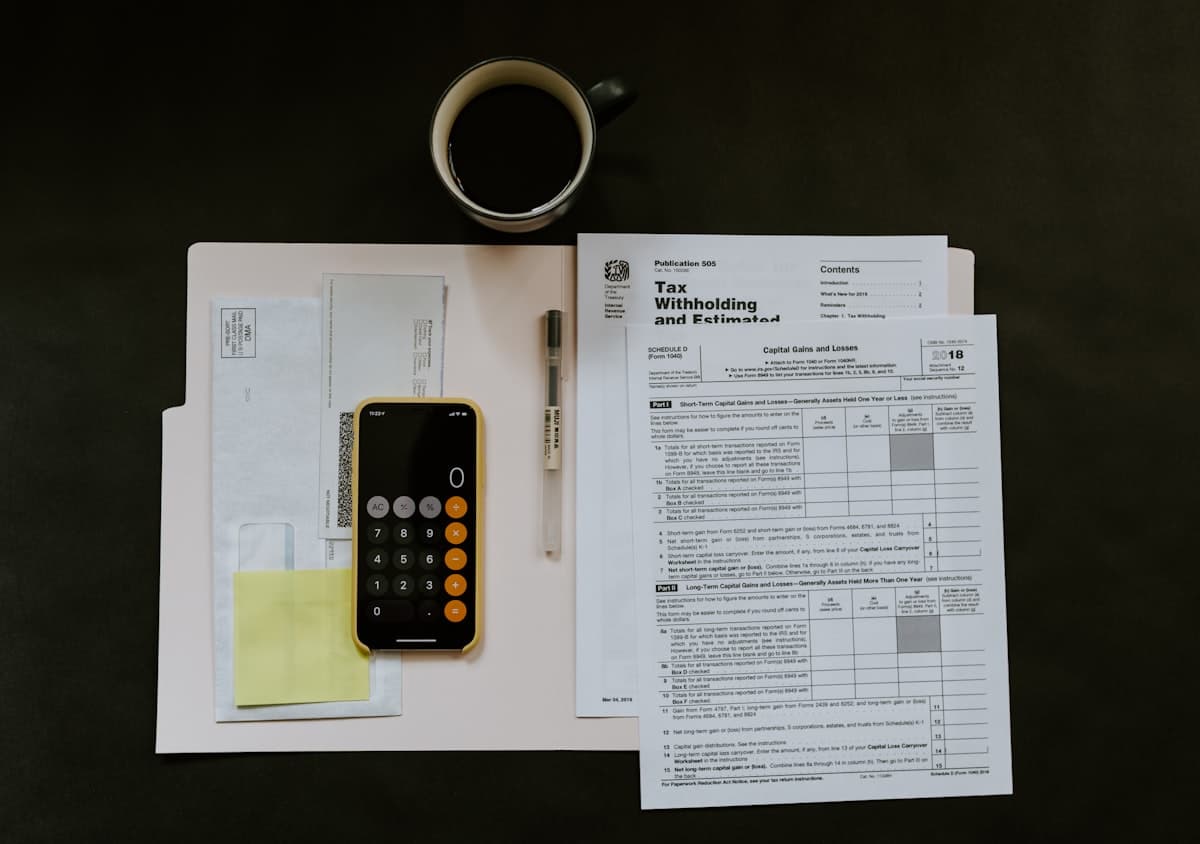
Every year, the same thing happens. Tax season approaches, your tax agent asks for your records, and you realise your books are not ready. You spend the next few weeks scrambling to collect receipts, reconcile bank statements, and piece together months of missing records.
This article is a practical guide to getting your books ready before that happens. Whether you are a sole proprietor filing Form B or a Sdn Bhd filing Form C, the principle is the same: organise your records throughout the year so tax time is not stressful.
Know your deadline
The first thing to know is when your tax return is due. In Malaysia, the deadlines for Year of Assessment 2025 (filed in 2026) are:
| Form | Who files | Deadline (e-Filing) |
|---|---|---|
| Form BE | Individuals (salary income only) | 15 May 2026 |
| Form B | Individuals with business income | 15 July 2026 |
| Form E | Employers (annual return) | 30 April 2026 |
| Form C | Sdn Bhd and companies | 8 months after FYE |
| Form PT | LLP (Perkongsian Liabiliti Terhad) | 8 months after FYE |
For Sdn Bhds, the deadline depends on your financial year end. If your FYE is 31 December 2025, your Form C is due by 31 August 2026 via e-Filing. After filing, you have 30 days to upload supporting documents to MITRS (Malaysian Income Tax Reporting System).
What your tax agent actually needs from you
When your tax agent (or accountant) asks you to "get your books ready," this is what they mean. They need:
- Profit and Loss statement for the financial year. This shows your revenue, cost of sales, and expenses broken down by category.
- Balance Sheet as at the financial year end. This shows your assets, liabilities, and equity.
- General Ledger with all transactions recorded and categorised. This is the detailed breakdown behind the P&L and Balance Sheet.
- Bank statements for all business bank accounts for the full year. They will cross reference these against your ledger.
- Supporting documents. Invoices, receipts, contracts, debit notes, credit notes. These back up every number in your books.
- Fixed asset list with purchase dates, amounts, and depreciation calculations. Your tax agent needs this to compute capital allowances.
- Payroll records. Salary details, EPF contributions, SOCSO, EIS, and PCB records for all employees.
- Previous year tax computation and assessment notices from LHDN.
If your bookkeeping is up to date, producing these documents is straightforward. If it is not, this is where the scramble begins.
The 6 month checklist
If your FYE just passed (or is coming up), here is a practical timeline for getting everything ready. I will use a December FYE as an example since it is the most common one.
January to February: Close the books
In the first two months after FYE, your focus should be on closing out the year. This means:
- Recording any remaining December transactions
- Reconciling all bank accounts up to 31 December
- Making sure all supplier invoices for the year are recorded, even if not yet paid
- Issuing Form EA to all employees by 28 February
March to April: Review and reconcile
This is when you review the full year numbers. Look for:
- Unreconciled bank transactions (deposits or payments you cannot identify)
- Missing receipts that need to be tracked down
- Intercompany balances that need to be confirmed (if you have related entities)
- Fixed assets that were purchased, sold, or written off during the year
File Form E (employer annual return) by 30 April if your company has employees.
May to June: Hand over to your tax agent
By this point your books should be complete. Package everything your tax agent needs (the list above) and send it to them. The earlier you hand over, the more time they have to prepare your tax computation and flag any issues.
If you wait until July, your tax agent is likely juggling multiple clients with the same deadline and your filing may be rushed.
July to August: File and upload to MITRS
Your tax agent files Form C on the MyTax portal. After submission, you (or they) must upload supporting documents to MITRS within 30 days. For a December FYE company, the MITRS deadline would be around late September 2026.
Documents uploaded to MITRS must be in PDF format and include your audited financial statements, tax computation, and capital allowance schedules.
The most common mistakes I see
After working with dozens of Sdn Bhds and sole proprietors in KL, Shah Alam, and across Malaysia, these are the mistakes that come up again and again during tax season:
- Mixing personal and business expenses. If you use your personal bank account for business transactions, it makes reconciliation extremely difficult. Your tax agent cannot tell which transactions are business expenses and which are personal. Open a dedicated business account if you have not already.
- Missing receipts. LHDN requires supporting documents for every expense you claim as a deduction. "I know I paid for it but I cannot find the receipt" is not enough. If you have no proof, the deduction may be disallowed.
- Not recording transactions throughout the year. Trying to reconstruct 12 months of records in January is painful and error prone. Monthly bookkeeping is always cheaper and more accurate than year end cleanup.
- Forgetting about intercompany transactions. If you have more than one company, make sure loans, payments, and services between them are properly documented and recorded.
- Not reconciling settlement platforms. If you receive payments through Grab, Shopee, Touch 'n Go, or other platforms, the settlement amounts often differ from gross sales because of commissions and fees. These need to be reconciled separately.
How I help my clients prepare
At IzzBookkeeping, tax season preparation is not a separate project. It is built into the monthly bookkeeping I do for my clients. When your books are updated every month, there is no last minute scramble when tax season arrives.
Here is what my clients get when tax time comes:
- Complete Profit and Loss and Balance Sheet ready to hand to their tax agent
- Fully reconciled bank accounts with no unexplained differences
- Organised receipts and invoices that their auditor can verify
- Fixed asset register with up to date depreciation
- A clean General Ledger they can share directly with their tax agent or auditor
My Growth plan (RM450 to RM650 per month) is designed for Sdn Bhds that need this level of support. It includes monthly reports, bank reconciliation, and quarterly reviews to catch issues before they become tax season problems.
If your books are already behind and you need to catch up before your filing deadline, I offer one time cleanup services starting at RM1,800 for annual account cleanup.
Common questions
When is the deadline for Form C?
Form C must be e-Filed within 8 months after your company's financial year end. For a December FYE, that means 31 August 2026. After filing, you have 30 days to upload documents to MITRS.
What documents does my tax agent need from me?
They typically need your Profit and Loss statement, Balance Sheet, General Ledger, bank statements, fixed asset list with purchase details, EPF/SOCSO/EIS records, and all supporting invoices and receipts.
How early should I start preparing?
Ideally, preparation is ongoing through monthly bookkeeping. If your books are up to date, there is not much extra work needed. If they are not, start at least 3 months before your filing deadline to give yourself time for cleanup.
Sources: LHDN Filing Programme 2026 (hasil.gov.my), SSAM Group Malaysia Tax Filing Deadlines 2026, JomeInvoice 2026 Tax Filing Guide, Companies Act 2016 Section 248, Income Tax Act 1967 Section 82B (MITRS requirements). Information accurate as of June 2026.
You might also find these helpful
Want your books ready before tax season?
I help Malaysian SMEs and Sdn Bhds keep their books organised all year round, so tax time is never stressful. Based in KL, working with clients across Malaysia.